
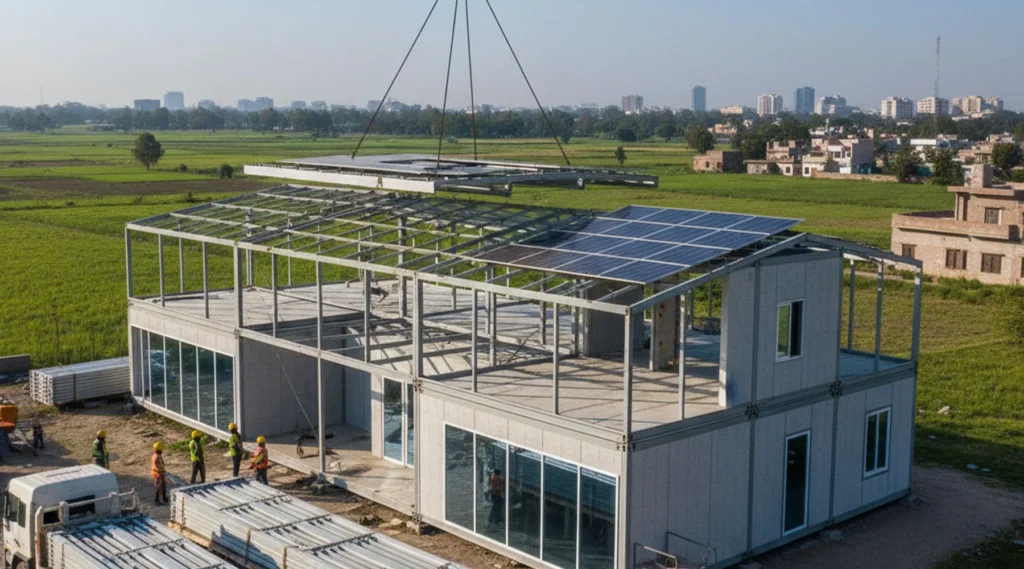
The construction industry in Pakistan is evolving rapidly, driven by the demand for faster, cost-effective, and high-quality building solutions. Among the most talked-about innovations is prefabricated construction — a method where building components are manufactured offsite and assembled onsite. But with traditional construction deeply rooted in our culture and market, the big question remains: Is prefabricated construction worth it in Pakistan? In this blog, we’ll dive deep into the world of prefab buildings to help you understand its benefits, challenges, cost dynamics, and suitability for projects in Pakistan.
1. What Is Prefabricated Construction?
Prefabricated construction (often called modular or prefab) is a process where structural elements — walls, floors, roof panels, and even entire rooms — are manufactured in a controlled factory environment. These components are then transported to the construction site and assembled like a puzzle. Instead of building brick by brick onsite, you essentially build fast by assembling pre-made parts.
This approach has gained traction worldwide for reducing time, cost, and material waste — and Pakistan is no exception. Cities like Lahore, Islamabad, and Karachi are starting to embrace prefab solutions for residential, commercial, and industrial projects.
2. Why Prefab Is Gaining Popularity in Pakistan
Faster Construction Time
One of the biggest advantages of prefabricated construction is speed. Traditional builds can take months or even years, especially when facing logistical challenges or weather delays. In contrast, prefab panels and modules are manufactured simultaneously with site preparation, which shortens overall project timelines significantly.
For developers and homeowners who want quick delivery without compromising quality, prefab is a game-changer.
Cost Savings
Prefab construction can be more cost-effective than traditional methods, mainly due to:
- Controlled factory environment reduces material waste
- Less labor required on site
- Fewer delays due to weather or logistics
While the initial material and transport cost of prefab panels may seem higher, the overall cost often balances out or becomes cheaper because of reduced labor and quicker project turnover.
Consistent Quality Control
Unlike onsite construction — where workmanship can vary — prefab components are produced under strict factory standards. This results in uniform quality and fewer defects, leading to stronger, more reliable structures.
With precision engineering and modern technology, prefab panels fit together seamlessly, offering superior structural integrity.
Reduced Environmental Impact
Pakistan is facing environmental challenges, including rising carbon emissions and waste management issues. Prefab construction promotes sustainability by minimizing:
- Onsite waste
- Energy consumption during building
- Noise and dust pollution
Factories can optimize material usage and recycle leftover products, making prefab a greener construction alternative.
3. Typical Uses of Prefabricated Structures in Pakistan
Residential Projects
Many homeowners in Pakistan are opting for prefab designs for:
- Affordable housing
- Vacation homes
- Emergency shelters
- Add-on rooms or extensions
Prefab homes can be customized with modern finishes, insulation, and aesthetic elements just like traditional houses.
Commercial Buildings
For offices, showrooms, and retail spaces, prefab solutions offer:
- Quick setup
- Scalable design
- Lower operating costs
This makes them ideal for startups, franchises, and temporary commercial buildings.
Industrial & Institutional Uses
Factories, warehouses, schools, and health clinics can benefit from prefab modules due to speed and durability. In emergencies or rapid deployment scenarios (e.g., flood relief), prefab units are especially useful.
4. Comparing Prefab vs Traditional Construction in Pakistan
Prefabricated Construction
Feature
Traditional Construction
- Construction Speed: Very Fast | Slow
- Cost: Moderate to Lower (long-term) | Variable (high labor + materials)
- Quality Control: High (factory standards) | Varies (onsite workmanship)
- Environmental Impact: Lower (less waste) | Higher (dust, noise, waste)
- Design Flexibility: High (modular units) | Very High (custom designs)
- Suitable for Harsh Weather: Yes | Depends on weather conditions
5. Challenges of Prefab Construction in Pakistan
Limited Local Manufacturing Facilities
Currently, Pakistan has fewer large-scale prefab factories compared to countries like China or Turkey. This can affect cost and availability of prefab components.
However, the industry is growing, and local players are investing in modular fabrication facilities.
Transport and Logistics Issues
Prefabricated panels are large and require careful transportation from factory to site. Poor infrastructure, traffic congestion, and limited handling equipment may pose logistical challenges.
This is especially true in cities like Karachi or Peshawar where road conditions vary widely.
Perception & Market Acceptance
Traditional construction has been the norm in Pakistan for generations. Many clients still associate quality with brick-and-mortar builds, making adoption slower.
However, perception is changing as more prefab projects showcase durability and design flexibility.
Regulatory & Building Code Barriers
Some regions in Pakistan lack clear regulations for prefab structures, which can slow down approvals and add complexity to planning.
Partnering with experienced engineering firms like Gemcon Engineering can help navigate these challenges and ensure compliance.
6. Is Prefab Worth It for You?
When Prefab Is a Good Choice
You need fast construction turnaround
Budget constraints are tight
You want consistent quality control
Sustainability matters to you
The project is modular (e.g., extensions, additions, temporary structures)
When Traditional Construction Might Be Better
Highly customized architectural design (complex shapes)
Local availability of materials and skilled labor makes traditional cheaper
Long-term investment in heritage homes
7. Tips for Successful Prefab Projects in Pakistan
Work with Experienced Engineering Partners
An experienced firm ensures accurate design, correct panel specifications, and organized onsite assembly.
Plan Early for Logistics
Decide the route, transport permits, and delivery timeline upfront to avoid delays.
Ensure Structural Compatibility
Prefab modules must meet seismic, wind, and climate standards — especially in earthquake-prone regions like Islamabad or Quetta.
Customize Smartly
Prefabrication can be customized, but certain design elements (like large spans or irregular shapes) may add cost.
8. Future Outlook of Prefab Construction in Pakistan
The future of prefabricated construction in Pakistan looks promising. With urbanization increasing demand for affordable yet quality housing, prefab solutions will continue gaining momentum. Government initiatives, investment in industrial fabrication units, and client education can pave the way for increased adoption.
Prefab isn’t just a trend — it’s becoming a strategic construction choice for modern development across Pakistan.
Conclusion
So, is prefabricated construction worth it in Pakistan?
Yes — especially for clients seeking faster build times, cost efficiency, consistent quality, and environmental sustainability. While challenges like logistics and market perception exist, the benefits make prefab an attractive alternative for residential, commercial, and industrial projects.
Gemcon Engineering specializes in delivering high-quality prefab solutions that balance innovation, durability, and cost effectiveness. Whether you’re planning a prefab home, office, or industrial unit, partnering with the right engineering team can make all the difference.