
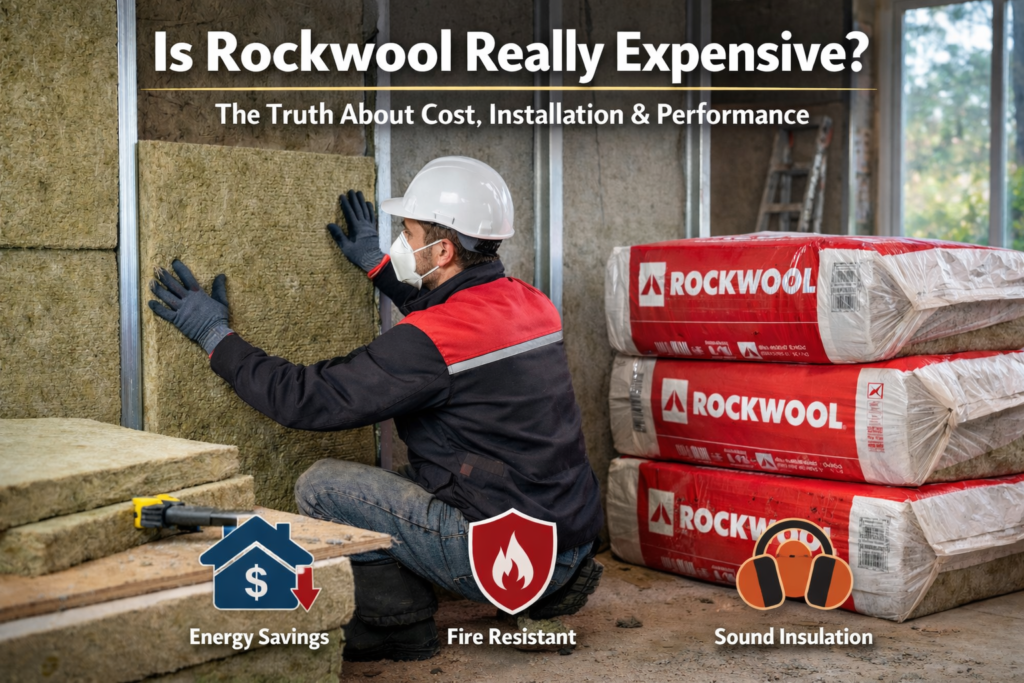
When it comes to insulation materials, Rockwool often gets a reputation for being expensive. Many homeowners, builders, and developers assume that choosing Rockwool means stretching their budget. However, this perception doesn’t tell the full story. In reality, Rockwool is a cost-effective, easy-to-install, and high-performance insulation solution that offers long-term value and a premium finish.
At Gemcon Engineering, we believe in educating clients so they can make informed construction decisions. Let’s break down the myths and uncover the truth about Rockwool’s cost, installation process, and overall performance.
Understanding What Rockwool Is
Rockwool, also known as mineral wool, is manufactured from natural volcanic rock and recycled materials. These are melted at extremely high temperatures and spun into dense, fibrous insulation slabs or rolls. This unique structure gives Rockwool excellent thermal, acoustic, and fire-resistant properties.
Modern construction projects increasingly rely on advanced materials like Rockwool, and companies such as Gemcon Engineering often recommend it for residential, commercial, and industrial buildings due to its durability and performance.
Why People Think Rockwool Is Expensive
The idea that Rockwool is expensive usually comes from initial material cost comparisons. When compared only on a per-square-foot basis, Rockwool may appear slightly higher in price than basic insulation options.
However, focusing only on upfront cost ignores critical factors such as:
- Long lifespan
- Reduced energy bills
- Minimal maintenance
- Improved fire and sound safety
When these factors are considered, Rockwool often proves more economical over time than cheaper alternatives.
The Real Cost: Short-Term vs Long-Term Value
Rockwool insulation is an investment, not an expense. While some insulation materials degrade or compress over time, Rockwool retains its shape and effectiveness for decades.
Key cost-saving benefits include:
- Energy efficiency: Better insulation reduces heating and cooling costs
- Durability: No sagging or performance loss over time
- Fire resistance: Adds an extra layer of safety, potentially lowering insurance risks
Construction experts at Gemcon Engineering emphasize that long-term operational savings often outweigh the slightly higher initial cost.
Easy Installation: A Major Cost Advantage
Another overlooked factor is ease of installation. Rockwool is designed to fit snugly into walls, ceilings, and partitions without requiring complex tools or procedures.
Benefits of easy installation include:
- Reduced labor time
- Lower installation costs
- Faster project completion
- Clean and precise finishing
Because it is rigid yet flexible, Rockwool allows engineers and contractors to work efficiently, which ultimately helps keep overall project costs under control. This is one reason professional firms like Gemcon Engineering prefer using it in modern construction projects.
Performance That Justifies the Price
Rockwool’s performance is where it truly stands out.
1. Thermal Insulation
Rockwool helps maintain indoor temperatures, keeping buildings cooler in summer and warmer in winter. This significantly reduces energy consumption.
2. Acoustic Comfort
Its dense fiber structure absorbs sound, making it ideal for homes, offices, hospitals, and commercial buildings where noise control is essential.
3. Fire Safety
Rockwool is non-combustible and can withstand extremely high temperatures. This added fire resistance enhances occupant safety and structural protection.
For projects focused on quality and safety, Gemcon Engineering often highlights Rockwool as a reliable and future-ready solution.
Premium Finish Without Premium Hassle
One of the biggest advantages of Rockwool is the solid, premium finish it provides. It integrates smoothly behind walls, ceilings, and façades without affecting design aesthetics.
Unlike some insulation materials that require additional layers or frequent replacements, Rockwool supports:
- Clean interior finishes
- Consistent performance
- Minimal post-installation issues
This makes it especially attractive for clients who want a high-end look without ongoing maintenance costs.
Is Rockwool Worth It for Pakistan’s Climate?
In regions with temperature extremes, dust, and noise pollution, Rockwool proves especially beneficial. Its moisture resistance and thermal stability make it well-suited for local conditions.
Engineering firms like Gemcon Engineering often recommend Rockwool for projects aiming for energy efficiency, comfort, and durability in both residential and commercial developments.
Final Verdict: Is Rockwool Really Expensive?
The short answer is no—Rockwool is not expensive when viewed correctly. It is:
- Cost-effective over the long term
- Easy and efficient to install
- High-performing in insulation, acoustics, and fire safety
- Capable of delivering a premium finish
Rather than focusing only on upfront cost, smart construction decisions consider durability, safety, and lifetime value—and by those standards, Rockwool stands out as a smart choice.
If you’re planning a project and want expert guidance on modern, efficient building materials, Gemcon Engineering is ready to help you build smarter, safer, and better.