
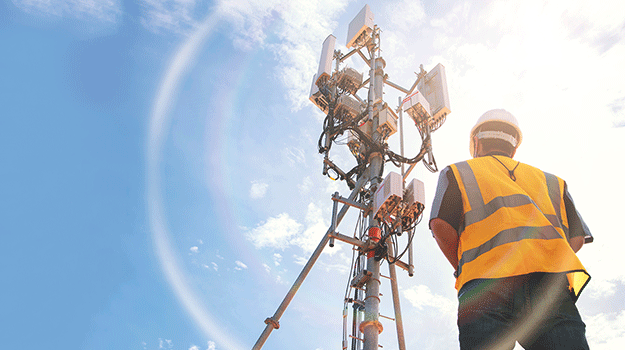
Pakistan is stepping into a new digital era with the gradual rollout of 5G technology. While most discussions around 5G focus on faster internet and smart devices, its real impact goes far beyond mobile phones. The deployment of 5G is set to reshape structural engineering, telecom infrastructure, and urban planning, creating new opportunities and challenges for construction and engineering firms across the country.
For companies like Gemcon Engineering, understanding these changes is essential to stay ahead in an evolving construction landscape.
Understanding 5G Infrastructure
Unlike previous mobile networks, 5G requires a denser and more complex infrastructure. Instead of relying on a few large towers, 5G uses:
- Small cell towers
- Rooftop antennas
- Fiber-optic backhaul networks
- Smart street infrastructure
This shift directly links telecom development with civil and structural engineering, making collaboration between these sectors more important than ever.
Impact of 5G on Structural Engineering
1. Increased Demand for Load-Bearing Structures
5G equipment may be smaller, but it is installed in large numbers. Rooftops of residential, commercial, and industrial buildings must be structurally assessed to carry additional loads safely.
Structural engineers now play a vital role in:
- Evaluating existing buildings
- Reinforcing rooftops
- Designing telecom-ready structures
Firms like Gemcon Engineering are increasingly involved in structural audits and retrofitting projects to support 5G installations.
2. Earthquake & Wind Resistance Considerations
Pakistan lies in a seismic zone, making safety a critical factor. 5G towers and rooftop installations must comply with:
- Seismic design standards
- Wind load calculations
- Long-term durability requirements
Engineering designs must ensure uninterrupted connectivity even during extreme weather or seismic events.
Telecom Infrastructure Meets Construction
1. Expansion of Fiber-Optic Networks
5G depends heavily on fiber-optic cables, which require extensive underground construction work. This includes:
- Trenching and ducting
- Road restoration
- Utility coordination
Construction companies must work closely with telecom providers to minimize urban disruption while ensuring long-lasting infrastructure.
2. Integration with Existing Buildings
New commercial and residential projects are now expected to be 5G-ready. This means:
- Dedicated telecom shafts
- Equipment rooms
- Smart cable routing
Engineering firms that integrate telecom requirements at the design stage gain a competitive advantage.
5G and Urban Planning in Pakistan
1. Smarter Cities, Smarter Engineering
5G is a backbone for smart city solutions, including:
- Intelligent traffic systems
- Smart surveillance
- Energy-efficient buildings
- IoT-based public services
Urban planners and engineers must design cities that support these technologies through proper zoning, structural planning, and infrastructure layout.
2. Reduced Visual Pollution
Traditional telecom towers often face public resistance due to visual impact. With 5G:
- Antennas are integrated into streetlights
- Rooftop installations are concealed
- Urban aesthetics are preserved
This requires innovative engineering designs that balance functionality and visual appeal.
Construction Challenges in 5G Deployment
While 5G brings progress, it also presents challenges:
- Coordination issues between telecom operators and municipal authorities
- Limited space in dense urban areas
- Regulatory approvals and safety compliance
- Cost management for retrofitting older structures
Engineering firms must adopt flexible planning strategies and advanced project management techniques to overcome these hurdles.
Opportunities for Engineering Firms
The 5G rollout opens multiple growth avenues for the construction and engineering sector:
- Structural assessment services
- Smart building design
- Telecom-friendly commercial projects
- Infrastructure modernization
Companies like Gemcon Engineering can position themselves as trusted partners by offering integrated solutions that combine civil engineering expertise with modern infrastructure needs.
Future of Construction in a 5G-Enabled Pakistan
As Pakistan moves toward digital transformation, the construction industry will no longer operate in isolation. Future projects will require:
- Cross-disciplinary collaboration
- Technology-driven design approaches
- Sustainable and resilient structures
5G is not just a telecom upgrade—it is a catalyst for smarter, safer, and more connected urban development.
Conclusion
The deployment of 5G infrastructure in Pakistan marks a turning point for engineering, telecom, and construction sectors. From structural reinforcements and fiber-optic networks to smart city planning, 5G is redefining how cities are built and managed.
Engineering firms that understand these synergies and adapt early—such as Gemcon Engineering—will lead the way in shaping Pakistan’s connected future.