
Introduction
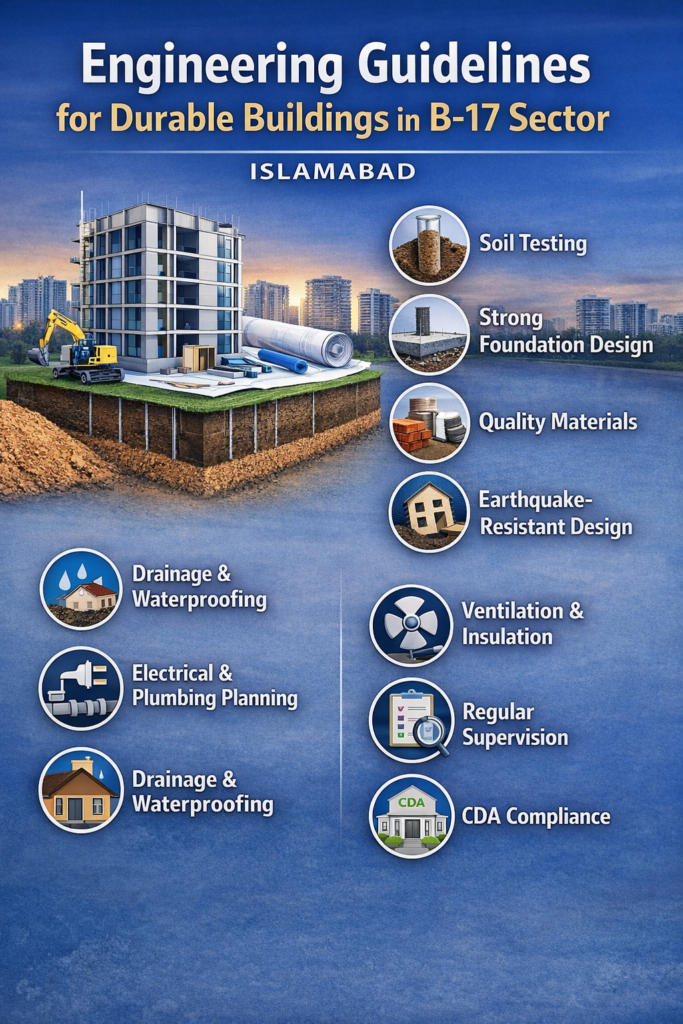
The B-17 sector in Islamabad is rapidly emerging as a prime residential and investment destination. With its strategic location, modern planning, and future growth potential, many homeowners and investors are now focusing on building long-lasting and structurally sound homes in this area. However, constructing a durable building requires more than just good materials—it demands proper engineering practices, planning, and execution.
In this blog, we will explore essential engineering guidelines that ensure durability, safety, and long-term value for buildings in B-17 Sector.
1. Importance of Soil Testing Before Construction
Before laying the foundation of any building, conducting a professional soil test is crucial. The soil composition in B-17 can vary across different plots, and understanding its bearing capacity helps engineers design a foundation that prevents settlement and cracks.
A proper soil test determines:
- Load-bearing capacity
- Soil type and moisture level
- Risk of erosion or shifting
Skipping this step can lead to structural issues in the future, making it a non-negotiable part of construction.
2. Strong Foundation Design
The foundation is the backbone of any building. In B-17, where new developments are ongoing, proper foundation design is essential for durability.
Key considerations include:
- Selecting the right type of foundation (raft, strip, or pile)
- Ensuring proper depth according to soil conditions
- Using high-quality concrete and steel
A well-designed foundation distributes the load evenly and prevents structural damage over time.
3. Use of High-Quality Construction Materials
Durability heavily depends on the quality of materials used. Cutting costs on materials may seem beneficial initially but can lead to expensive repairs later.
Important materials to focus on:
- Cement (high-grade and fresh)
- Steel (corrosion-resistant)
- Bricks/blocks (uniform and strong)
- Sand and aggregates (clean and well-graded)
Using certified materials ensures the building can withstand environmental stress and aging.
4. Structural Design by Professionals
Hiring experienced engineers and architects is essential for safe and durable construction. A professional structural design ensures:
- Proper load distribution
- Resistance to environmental factors
- Compliance with building codes
Working with experts like Gemcon Engineering can significantly improve the quality and reliability of your construction project.
5. Earthquake-Resistant Design
Islamabad lies in a seismic zone, making earthquake-resistant design a critical factor. Buildings in B-17 should follow modern seismic design principles, including:
- Reinforced concrete frames
- Proper column-beam connections
- Shear walls for stability
These measures help minimize damage and protect lives during seismic activity.
6. Proper Drainage and Waterproofing
Water is one of the biggest threats to building durability. Poor drainage and lack of waterproofing can lead to:
- Damp walls
- Structural weakening
- Mold and health issues
Ensure:
- Proper slope for rainwater drainage
- Waterproofing of roofs, basements, and bathrooms
- Installation of effective sewerage systems
7. Electrical and Plumbing Planning
Durable buildings are not just about structure—they also require efficient internal systems.
Best practices include:
- Using high-quality wiring and pipes
- Planning layouts before construction
- Avoiding unnecessary wall cutting after completion
Proper planning reduces maintenance issues and increases the building’s lifespan.
8. Ventilation and Thermal Insulation
Good ventilation and insulation improve both comfort and durability.
Key benefits:
- Prevents moisture buildup
- Reduces energy consumption
- Enhances indoor air quality
In B-17, where temperatures can vary, insulation plays a vital role in maintaining a comfortable indoor environment.
9. Regular Supervision and Quality Control
Even the best design can fail without proper execution. Regular site supervision ensures:
- Work is done according to design
- Materials are used correctly
- Construction standards are maintained
Hiring a professional engineering firm like Gemcon Engineering ensures consistent quality checks throughout the project.
10. Compliance with CDA Regulations
B-17 Sector falls under CDA guidelines, and all construction must comply with approved bylaws.
Important aspects include:
- Approved building plans
- Height and area restrictions
- Safety and environmental regulations
Following these rules avoids legal issues and ensures a smooth construction process.
Conclusion
Building a durable home in B-17 Sector is a long-term investment that requires careful planning, quality materials, and professional engineering expertise. From soil testing to final finishing, every step plays a crucial role in ensuring the safety and longevity of the structure.
By following these engineering guidelines and working with experienced professionals like Gemcon Engineering, you can construct a building that stands strong for decades while maintaining its value and functionality.