
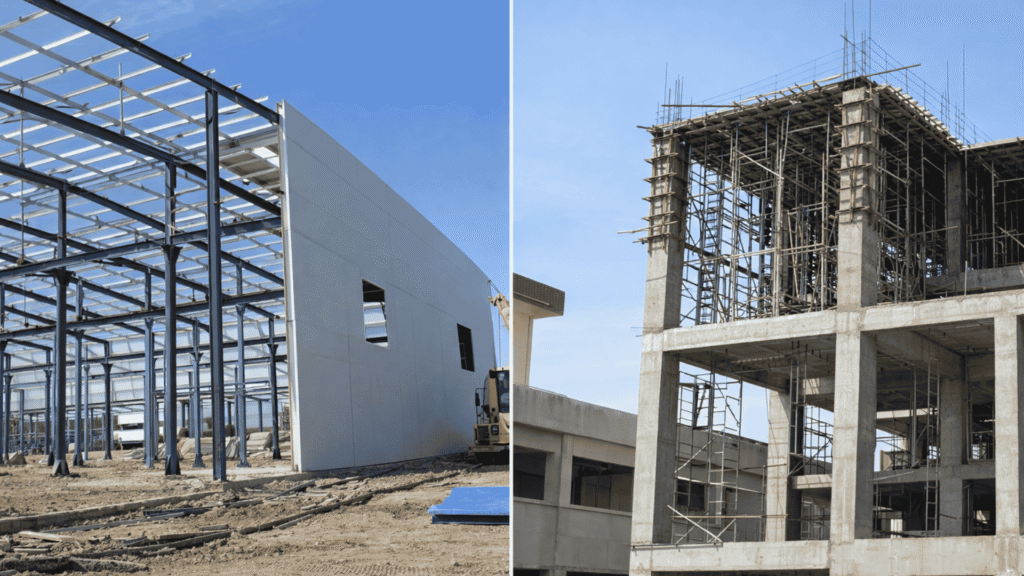
Choosing the right structural system is one of the most important decisions in any construction project. Whether you’re building a residential home, commercial plaza, industrial warehouse, or high-rise building, the structure you choose directly impacts the project’s strength, durability, cost, and construction timeline.
Two of the most widely used construction systems are Reinforced Cement Concrete (RCC) and Steel Structures. Each has its own advantages and is suitable for different types of projects. Working with experienced professionals offering gemconengineering our-structure-design-services ensures you select the most suitable system for your project’s requirements.
What Is an RCC Structure?
Reinforced Cement Concrete (RCC) combines concrete with steel reinforcement bars (rebar) to create a strong and durable structural system. It is the most common construction method used for residential and commercial buildings across Pakistan.
Advantages of RCC Structures
- Excellent structural strength
- High fire resistance
- Long service life
- Low maintenance requirements
- Suitable for multi-story residential buildings
- Easily available construction materials
RCC is widely used for homes, apartments, schools, hospitals, and office buildings because of its durability and reliability.
What Is a Steel Structure?
Steel structures use fabricated steel beams, columns, and trusses to form the building’s framework. These components are manufactured off-site and assembled on-site, making construction faster and more efficient.
Steel structures are commonly used for:
- Industrial warehouses
- Shopping malls
- Commercial buildings
- Factories
- Airports
- Exhibition halls
- Large-span buildings
RCC vs Steel Structures: Key Comparison
1. Strength and Durability
Both RCC and steel structures provide exceptional strength when designed correctly.
- RCC performs extremely well under compression.
- Steel offers excellent tensile strength and flexibility.
- Steel structures perform better in earthquake-prone areas because they can absorb seismic forces.
- RCC structures are highly durable and can last for decades with proper construction and maintenance.
2. Construction Speed
Construction speed is one of the biggest differences between the two systems.
Steel Structures
- Faster installation
- Prefabricated components
- Less on-site work
- Shorter project completion time
RCC Structures
- Requires curing time
- More labor-intensive
- Longer construction process
If your project has a strict deadline, steel structures are often the preferred option.
3. Cost Considerations
Construction costs depend on project size, material selection, labor, and design complexity.
Generally:
- RCC structures usually have lower initial material costs.
- Steel structures may have higher material costs but reduce labor and construction time.
- Long-term project costs depend on maintenance, durability, and project requirements.
For accurate budgeting and structural planning, consulting experts in gemconengineering.our-structure-design-services can help you choose the most cost-effective solution.
4. Design Flexibility
Steel structures offer greater flexibility for modern architecture.
Benefits include:
- Large open spaces
- Longer structural spans
- Fewer interior columns
- Easy future expansion
- Modern architectural aesthetics
RCC structures can also accommodate complex designs but generally require additional beams and columns for large spans.
5. Maintenance Requirements
RCC
- Low maintenance
- Resistant to corrosion when properly constructed
- Long-lasting performance
Steel
- Requires periodic inspections
- Needs protective coatings in corrosive environments
- Easy to repair or modify when necessary
Proper maintenance ensures excellent performance for both systems.
6. Earthquake Performance
Steel structures are known for their flexibility, allowing them to withstand seismic movements more effectively.
RCC buildings can also perform exceptionally well during earthquakes when designed according to modern structural codes by qualified engineers.
7. Fire Resistance
Concrete naturally provides excellent fire resistance, making RCC structures a preferred choice for many residential and institutional buildings.
Steel structures require fire-protection systems or fire-resistant coatings to maintain their structural integrity during extreme temperatures.
8. Sustainability
Both RCC and steel structures contribute to sustainable construction when used responsibly.
RCC Benefits
- Long lifespan
- Excellent thermal mass
- Energy-efficient buildings
- Locally sourced materials
Steel Benefits
- Highly recyclable
- Reduced construction waste
- Faster construction process
- Easier future modifications
Selecting sustainable materials and efficient structural systems helps reduce environmental impact.
Best Applications for RCC
RCC structures are ideal for:
- Residential homes
- Villas
- Apartment buildings
- Schools
- Hospitals
- Office buildings
- Public infrastructure
Best Applications for Steel Structures
Steel structures are well suited for:
- Warehouses
- Industrial plants
- Shopping malls
- Sports complexes
- Commercial buildings
- Manufacturing facilities
- Large-span structures
Which One Should You Choose?
The right structural system depends on your project’s objectives.
Choose RCC if you need:
- Long-term durability
- Superior fire resistance
- Residential construction
- Low maintenance
Choose Steel Structures if you need:
- Faster construction
- Flexible architectural design
- Large open spaces
- Industrial or commercial facilities
- Future expansion possibilities
Every project is unique, so the decision should be based on engineering analysis, budget, site conditions, and intended use.
Build with Expert Structural Engineering
A successful construction project begins with a strong structural foundation and professional planning. Whether you’re constructing a home, commercial building, or industrial facility, choosing the right structural system is critical.
The experienced team at Gemcon Engineering’s Structural Design Services provides comprehensive structural analysis, architectural planning, project supervision, and engineering solutions to ensure every project is safe, efficient, and built to international standards.
Conclusion
Both RCC and steel structures have distinct advantages, and the best choice depends on your project’s size, budget, design requirements, and long-term goals. RCC remains the preferred option for most residential buildings due to its durability and fire resistance, while steel structures are ideal for commercial and industrial projects requiring speed, flexibility, and large-span construction.
Before making your final decision, consult professionals specializing in a structural design and engineering solutions With expert guidance from Gemcon Engineering, you can build a structure that delivers safety, durability, and lasting value.