
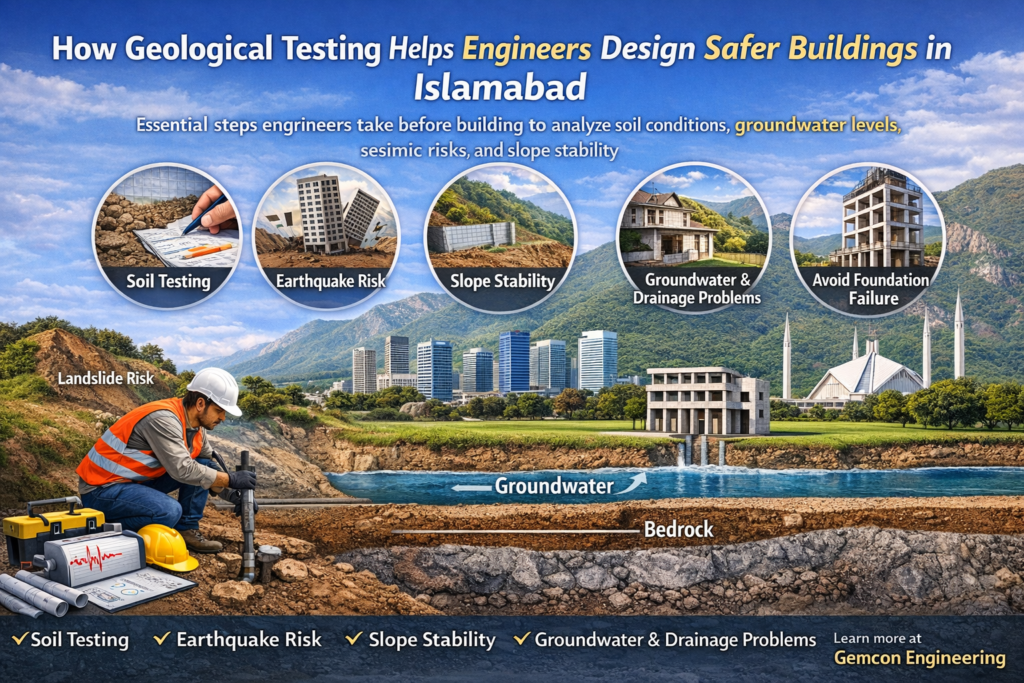
Islamabad is known for its modern infrastructure, scenic beauty, and rapidly expanding housing sectors. From the developed sectors like F-6 and G-11 to the newer developments such as B-17 and B-12, construction activity continues to grow every year. However, building structures in a city surrounded by hills and varying soil conditions requires careful planning and scientific analysis.
One of the most important steps before construction is geological testing. Engineers rely on geological investigations to understand soil behavior, groundwater conditions, and potential geological risks. Professional engineering firms such as <a href=”https://gemconengineering.com/”>Gemcon Engineering</a> use geological testing to ensure buildings are designed to withstand environmental and structural challenges.
In this blog, we will explore how geological testing plays a critical role in designing safe, durable, and sustainable buildings in Islamabad.
Understanding Geological Testing in Construction
Geological testing, also called geotechnical investigation, is the process of studying soil, rock layers, groundwater, and other underground conditions before construction begins. The goal is to understand whether the ground can safely support the structure being planned.
For example, before designing a residential or commercial building, engineers analyze:
- Soil strength and stability
- Soil composition (clay, sand, gravel, rock)
- Groundwater level
- Seismic and earthquake risks
- Soil settlement potential
These tests help engineers design foundations that match the site’s conditions. Firms like <a href=”https://gemconengineering.com/”>Gemcon Engineering</a> often perform these studies before construction projects begin in Islamabad and Rawalpindi.
Why Geological Testing Is Important in Islamabad
Islamabad’s geography is unique. The city is located near the Margalla Hills, and its terrain includes rocky zones, clay soil areas, and filled land in newer sectors.
Because of this diversity, two plots in different sectors may require completely different foundation designs.
Without geological testing, buildings may face serious problems such as:
- Foundation failure
- Structural cracks
- Soil settlement
- Water seepage in basements
- Landslides in hilly areas
Engineering experts from <a href=”https://gemconengineering.com/”>Gemcon Engineering</a> emphasize that geological testing is essential to ensure safety, especially for multi-story buildings and commercial projects.
Soil Analysis and Foundation Design
One of the most important outcomes of geological testing is soil analysis. Engineers need to know how strong the soil is and how much load it can carry.
Different soil types behave differently:
Clay Soil
Clay expands when wet and shrinks when dry. Buildings on clay soil require specially designed foundations.
Sandy Soil
Sand drains water quickly but may not provide strong support for heavy structures.
Rocky Soil
Rock foundations are generally stable but may require drilling and specialized construction techniques.
After analyzing the soil, engineers decide which type of foundation is safest:
- Strip foundations
- Raft foundations
- Pile foundations
Professional consultants such as <a href=”https://gemconengineering.com/”>Gemcon Engineering</a> use geological data to recommend the best foundation system for each project.
Reducing Earthquake Risks
Pakistan lies in a seismic zone, which means earthquakes can occur. Islamabad has experienced mild tremors in the past due to nearby tectonic activity.
Geological testing helps engineers design buildings that can handle seismic stress. The tests identify:
- Soil liquefaction risks
- Weak soil layers
- Ground movement potential
Based on this information, engineers modify building designs to improve earthquake resistance.
Companies like https://gemconengineering.com/”integrate geological findings with structural engineering practices to make buildings safer during earthquakes.
Preventing Water and Drainage Problems
Another important aspect of geological testing is analyzing groundwater levels and drainage conditions.
High groundwater levels can create serious construction problems such as:
- Basement flooding
- Foundation weakening
- Soil erosion around structures
By studying groundwater conditions, engineers can design proper drainage systems and waterproof foundations.
Experienced firms such as “https://gemconengineering.com/” ensure that buildings are protected from water-related structural damage through careful site analysis.
Identifying Landslide and Slope Risks
Many areas near the Margalla Hills have sloping terrain. While these areas offer beautiful views, they also present geological challenges.
Geological testing helps engineers determine:
- Slope stability
- Landslide risk
- Soil erosion potential
If the site has risks, engineers can implement protective measures such as:
- Retaining walls
- Proper drainage systems
- Reinforced foundations
Consultants like https://gemconengineering.com conduct detailed slope assessments before approving construction projects in hilly regions.
Saving Construction Costs in the Long Run
Some property developers try to skip geological testing to save time or money. However, this decision can lead to much higher costs later.
Without proper soil analysis, buildings may require expensive repairs such as:
- Foundation reinforcement
- Structural crack repairs
- Drainage corrections
Geological testing may seem like an extra expense at first, but it reduces long-term construction risks and costs.
Professional engineering companies such as gemconengineering.advise developers to treat geological investigations as a mandatory step before starting construction.
Supporting Sustainable Urban Development
As Islamabad continues to grow, sustainable and safe urban development is becoming more important.
Geological testing supports sustainable construction by:
- Preventing environmental damage
- Ensuring safe land usage
- Reducing structural failures
- Protecting public safety
Engineering experts from “https://gemconengineering.com/”>Gemcon Engineering</ play an important role in promoting safe construction practices through proper geological assessment.
Conclusion
Geological testing is a critical step in modern construction, especially in a geographically diverse city like Islamabad. By analyzing soil conditions, groundwater levels, seismic risks, and slope stability, engineers can design buildings that are both safe and durable.
Skipping geological testing can lead to serious structural problems and financial losses. On the other hand, conducting proper geological investigations ensures that buildings are designed according to the actual conditions of the land.
Engineering firms such as“https://gemconengineering.comhelp developers, builders, and homeowners make informed construction decisions through professional geological and engineering services.
As Islamabad continues expanding into new sectors, geological testing will remain one of the most important tools for building strong, reliable, and safe structures for the future.