
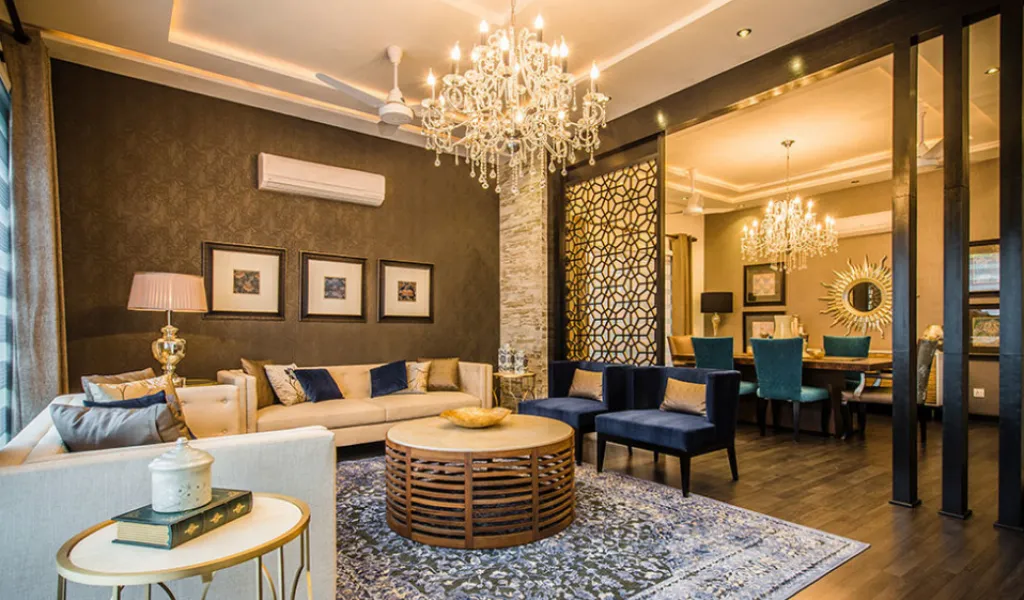
If you are building a new house, renovating an old one or setting up an office, the first question is usually the same: how much will interior design cost? The honest answer is that it depends on the size of the space, the materials you choose and how much work you want done. This guide breaks down the typical costs in Pakistan, what changes the price and how to plan a budget that works for you.
What Does “Interior Design Cost” Actually Include?
Many people think interior design is only about picking colors and furniture. In reality, the cost is made up of two separate parts:
- Design fee: space planning, layouts, 3D renders, material selection and working drawings.
- Execution cost: the actual work, including false ceilings, woodwork, flooring, lighting, paint, wall finishes and furniture.
The execution cost is almost always much bigger than the design fee. When you compare quotes, make sure each company is quoting for the same scope of work, or the numbers will not be comparable.
Average Interior Design Cost in Pakistan (Per Sq Ft)
The ranges below are indicative. Prices change with the market, material rates and city, so use them for planning, not as a final quote.
| Type of work | Approximate cost range |
|---|---|
| Design only (layout + 3D renders) | Rs. 100 to Rs. 300 per sq ft |
| Basic finishing (paint, simple ceiling, basic lighting) | Rs. 1,500 to Rs. 3,000 per sq ft |
| Mid-range interior (woodwork, false ceiling, good fixtures) | Rs. 3,000 to Rs. 6,000 per sq ft |
| Premium or luxury interior (custom furniture, imported finishes) | Rs. 6,000 per sq ft and above |
For example, a 10 marla house with around 2,500 sq ft of covered area could range from a few million rupees for a basic finish to considerably more for a premium one. The only way to get an accurate number is a site visit and a clear list of what you want.
What Affects the Cost of Interior Design?
1. Size and condition of the space
Bigger spaces cost more in total, but sometimes less per sq ft. A new grey-structure house is easier to work with than an old house that needs demolition, rewiring or plumbing changes.
2. Quality of materials
This is the biggest factor. Local plywood, imported MDF, solid wood, ordinary tiles and premium porcelain can differ greatly in price. Two kitchens of the same size can cost very different amounts depending on the material.
3. Type of space
Kitchens and bathrooms are the most expensive areas per sq ft because of cabinetry, fittings and plumbing. Bedrooms and lounges usually cost less. Offices have their own needs, such as workstations, partitions and lighting.
4. Custom work vs ready-made
Custom furniture and built-in wardrobes fit your space perfectly but cost more than ready-made pieces. A mix of both is often the smartest choice.
5. Design complexity
Curved ceilings, feature walls, hidden lighting and decorative panels add labour and material cost. A clean, simple design is usually cheaper and often looks more modern.
6. Timeline
Rushed projects can cost more because of overtime and urgent material sourcing. Planning early saves money.
7. The company you hire
Experienced firms may charge more, but they usually avoid expensive mistakes, delays and rework. The cheapest quote is not always the lowest final cost.
Room-by-Room Cost Thinking
- Kitchen: Usually the most expensive room because of cabinets, countertops, a hob and hood, and plumbing.
- Bedrooms: Costs depend mostly on wardrobes, beds, ceilings and lighting.
- Living room and lounge: Main costs are ceilings, TV wall, flooring and furniture.
- Bathrooms: Tiles, sanitary ware and fittings drive the price.
- Office: Partitions, flooring, lighting and furniture decide the budget.
How to Save Money Without Compromising Quality
- Fix your budget first. Tell your designer your range so they design within it from the start.
- Prioritise. Spend more on things that are hard to change later, like the kitchen, wardrobes and flooring. Keep decor and soft furnishings simple.
- Avoid changing the design mid-project. Changes after work starts are the most common reason budgets go over.
- Mix materials smartly. Use premium material where it is visible and good-quality standard material elsewhere.
- Compare quotes properly. Check that each quote lists materials, brands and quantities, not just one total number.
- Keep a buffer. Set aside around 10 to 15 percent for unexpected costs.
Questions to Ask Before Hiring an Interior Designer
- Can I see completed projects similar to mine?
- Is the quote itemised, and which brands and materials are included?
- Who supervises the work on site?
- What is the payment schedule, and how long will the project take?
- What happens if the cost or timeline changes?
A good company will answer these clearly. If answers feel vague, take that as a warning sign.
Why Plan Your Interior Together with Design and Construction?
When architecture, construction and interior design are handled by separate people, details like electrical points, ceiling heights and plumbing often clash and need costly fixes later. Working with one team from the start avoids that. At Gemcon Engineering, we provide architectural design, construction and interior design services under one roof, so your plan, budget and finishing stay consistent from the first sketch to handover.
Final Thoughts
Interior design costs in Pakistan vary widely, but the numbers become much clearer once you know your space, your priorities and your budget. Start with a clear scope, compare itemised quotes and choose a team that explains costs openly.
Ready to find out what your project will cost? Explore our interior design services or contact Gemcon Engineering for a free consultation and a clear estimate based on your space.