
Introduction
Quality isn’t what you see at the end — it’s what you check during the process.
In construction, the final appearance of a building often hides the countless inspections, measurements, and corrective actions carried out during execution. Many structural and finishing problems originate long before the final coat of paint is applied. One of the most critical—yet frequently underestimated—steps in this process is plaster quality checking.
Plaster acts as both a protective and finishing layer for walls and ceilings. If it is applied incorrectly, even the best materials and designs can fail to deliver long-term performance. At Gemcon Engineering, plaster checks are treated as a vital quality control activity rather than a routine task. These checks ensure smooth finishes, accurate levels, strong bonding, and long-lasting durability. This blog explains why plaster checks matter at every stage and how a process-driven approach leads to superior construction outcomes.
Why Plaster Quality Checks Are Crucial in Construction
Plastering is far more than a cosmetic activity. It plays a foundational role in the performance and lifespan of a building. Proper plaster application and inspection help in:
- Protecting walls from moisture penetration and environmental wear
- Creating a smooth and stable surface for paint, tiles, and finishes
- Maintaining correct wall alignment, levels, and dimensions
- Supporting the overall durability of the structure
When plaster checks are ignored or rushed, common issues such as cracks, hollow patches, uneven surfaces, and paint peeling begin to appear. These defects not only affect aesthetics but also increase maintenance costs over time. This is why professional firms like Gemcon Engineering emphasize inspection during execution rather than relying on final-stage corrections.
To understand their approach to quality-focused construction, visit:
https://gemconengineering.com/services/
Quality Is Built Step by Step — Not at the End
Many construction defects become visible only after project completion, when fixing them is both expensive and disruptive. A process-focused quality control system helps prevent these issues before they escalate.
Regular plaster checks during construction help to:
- Identify uneven plaster thickness early
- Detect weak bonding between plaster and surface
- Ensure proper curing and drying conditions
- Maintain alignment with architectural and structural designs
By monitoring quality at each stage, construction teams ensure that problems are resolved immediately rather than hidden under layers of finishes. This mindset ensures that quality is engineered into the building rather than applied as a last-minute solution.
Key Areas Checked During the Plastering Process
1. Surface Preparation
Proper surface preparation is the foundation of durable plasterwork. Before plastering begins, surfaces must be:
- Clean and free from dust, oil, and loose material
- Adequately roughened to improve bonding
- Moistened to prevent rapid water absorption
Neglecting preparation often leads to plaster detachment, cracking, and hollow sounds after drying. Careful inspection at this stage prevents future failures.
2. Plaster Thickness Consistency
Uniform plaster thickness is essential for both structural strength and visual consistency. Excessively thick or thin plaster can weaken the surface and increase material wastage.
During quality checks, engineers ensure that:
- Plaster thickness meets design and specification requirements
- Hollow or overfilled areas are avoided
- Corners, edges, and junctions are properly formed
Consistent thickness improves durability and ensures better control over material usage.
3. Level and Alignment Accuracy
Incorrect wall levels can affect multiple construction elements later, including:
- Tile and flooring installation
- Door and window fittings
- Furniture alignment and interior finishes
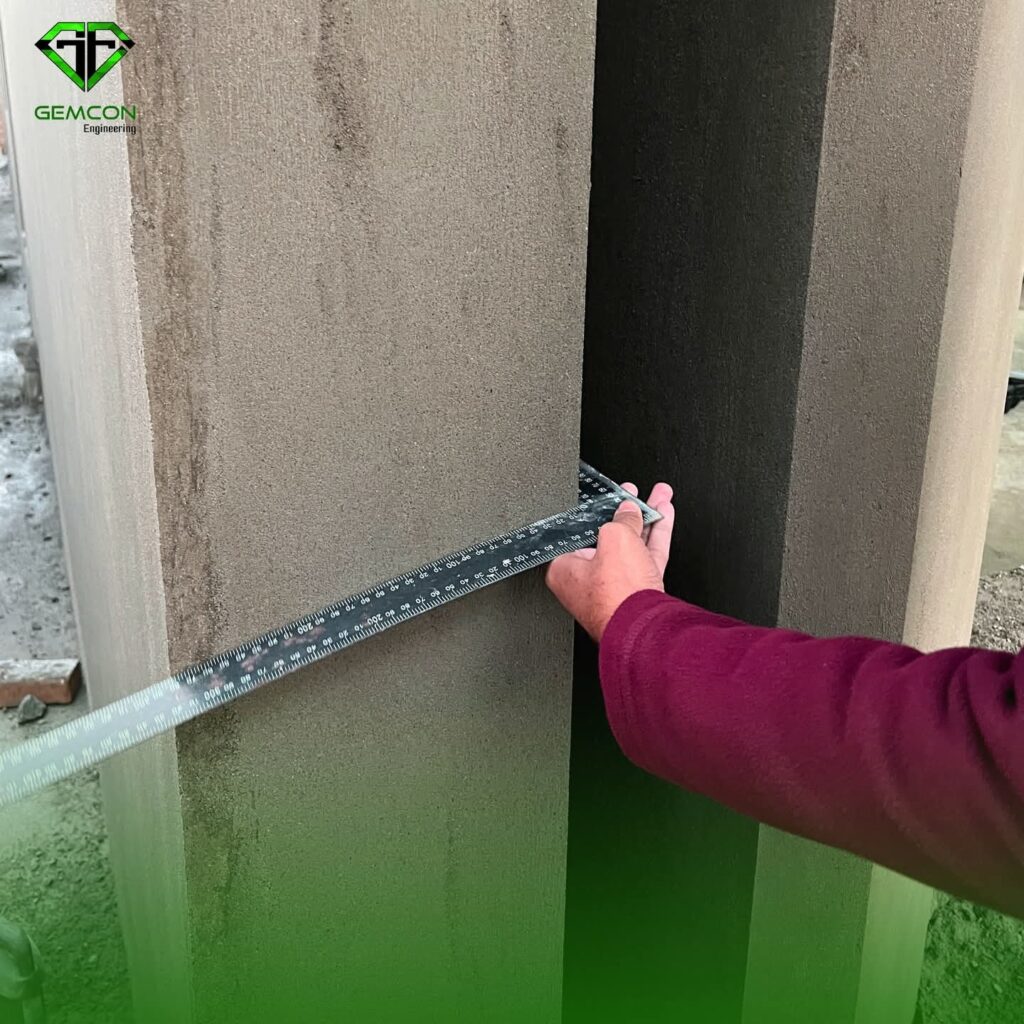
Using appropriate tools and reference points, plaster checks ensure walls are:
- Vertically plumb
- Horizontally level
- Properly aligned with drawings
This precision is a defining characteristic of quality-driven firms such as Gemcon Engineering.
4. Surface Smoothness
Surface smoothness directly impacts the final appearance of interiors and exteriors. Poor plaster finishing leads to higher finishing costs and visible defects.
Quality checks help identify:
- Trowel marks and ridges
- Waves or uneven textures
- Rough patches that may affect paint adhesion
Addressing these issues early reduces the need for excessive putty or rework later.
5. Curing and Drying Control
Curing is one of the most overlooked yet critical stages of plastering. Improper curing reduces plaster strength and increases the risk of cracking.
Plaster quality checks ensure:
- Adequate curing time is followed
- Moisture levels are maintained correctly
- Plastered surfaces are protected from extreme heat or wind
Proper curing significantly enhances the lifespan and strength of plastered surfaces.
How Process-Based Checks Improve Long-Term Strength
When plaster is applied correctly and inspected throughout the process:
- Walls are more resistant to cracking
- Paint and finishes last longer
- Maintenance and repair costs are reduced
- Overall structural performance improves
This is why experienced construction firms prioritize continuous quality checks over cosmetic fixes after completion. A disciplined process delivers long-term value rather than short-term visual appeal.
The Gemcon Engineering Approach to Quality
At Gemcon Engineering, quality control is embedded into every phase of construction. Plaster checks are carried out with precision and accountability to ensure:
- Smooth, durable finishes
- Accurate wall levels and alignment
- Compliance with engineering and safety standards
- Long-lasting structural strength
This structured, process-oriented approach positions Gemcon Engineering as a reliable partner for high-quality construction projects.
Explore their professional services here:
https://gemconengineering.com/services/
Why Clients Benefit from Rigorous Plaster Inspections
Clients often judge construction quality by visible finishes, but true quality lies beneath the surface. With thorough plaster inspections:
- Rework and corrective costs are minimized
- Project schedules remain on track
- Final finishes appear cleaner and more refined
- Buildings perform better over their lifespan
This translates into better value for investment, improved durability, and peace of mind for clients.
Conclusion
Quality isn’t a final inspection — it’s a continuous commitment.
Plaster checks may appear to be a small part of the construction process, but they play a major role in ensuring smooth finishes, accurate levels, and long-lasting strength. By focusing on quality during execution rather than after completion, construction teams can prevent defects before they arise.
Through a disciplined, process-driven approach, Gemcon Engineering ensures that every project meets high engineering standards long before the final coat of paint is applied—delivering results that stand the test of time.