
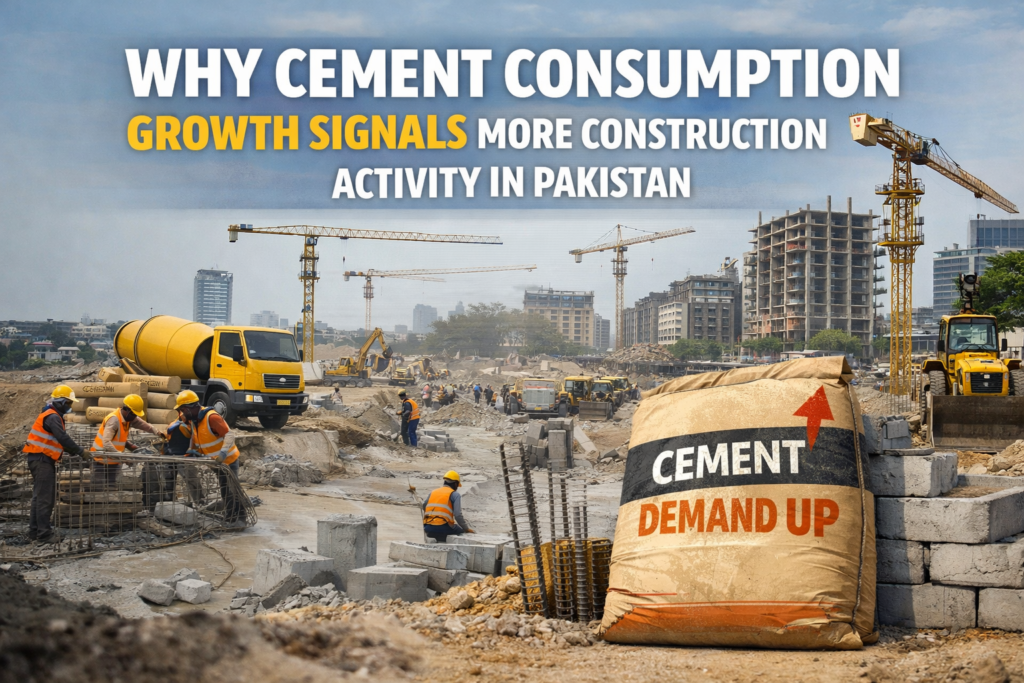
Construction activity is often considered a key indicator of economic growth and urban development. In Pakistan, recent data on cement consumption reveals strong signals that the construction industry is gaining momentum, underpinned by infrastructure projects, residential developments, and post-disaster rebuilding efforts. When cement demand rises, it typically means more buildings are going up, more infrastructure is being laid down, and economic activity in the construction sector is expanding. In this blog, we will explore why increasing cement consumption is a strong marker of construction growth in Pakistan, what it means for the broader economy, and how this trend can inform businesses, investors, and engineering firms like Gemcon Engineering.
Understanding Cement Consumption as an Economic Indicator
Cement is a fundamental material used in construction—from residential homes and bridges to highways and commercial buildings. Because it is essential to virtually all construction activities, cement consumption is closely linked to the level of construction work in a country. When construction activity rises, so does the demand for cement; conversely, when development slows, cement demand often declines.
In Pakistan, official industry data points to a notable uptick in cement usage in recent months. According to the All-Pakistan Cement Manufacturers Association (APCMA), total cement consumption increased significantly in September 2025, with domestic market usage rising by over 14% year-on-year. Overall cement consumption grew by around 7% compared to the same period last year.
Rising Domestic Demand Reflects Local Construction Activity
Domestic cement consumption is a strong indicator of local construction activity. A growing domestic market suggests that more projects are underway—whether residential, commercial, or public infrastructure.
Here’s what the recent data tells us:
- Domestic sales saw an increase of around 14% in September 2025, while overall consumption rose by roughly 7% compared to the previous year.
- Cement dispatches (which include both local and export sales) climbed by more than 16% in the first quarter of the 2026 fiscal year, reflecting stronger industry performance.
This increase in domestic consumption is especially meaningful because it reflects active construction projects across the country, driven by urbanization, housing demands, and infrastructure development
Infrastructure Development and Public Works
One of the main drivers of higher cement consumption is public sector infrastructure development. Governments often launch large-scale projects to improve transportation networks, utilities, and public facilities. These projects require vast amounts of cement, and their progress has a cascading effect on different parts of the construction ecosystem.
For example, rehabilitation following natural disasters (such as floods) requires considerable rebuilding of roads, bridges, and housing. Increased cement consumption signals that such reconstruction efforts are underway and that public investments are translating into ground-level activity. Increases in demand can also be attributed to ongoing housing projects and expansion of urban centers.
Reconstruction and Post-Disaster Recovery Efforts
Pakistan has faced natural calamities such as floods and heavy rains in recent years, leading to extensive rebuilding efforts in affected regions. These reconstruction projects often involve repairing damaged infrastructure and constructing new, more resilient buildings.
APCMA data specifically noted that improved cement consumption could be supported further by construction in flood-affected areas—a sign that rebuilding efforts are contributing to higher demand.
This dynamic shows that not only planned development but also reactive construction (post-disaster recovery) plays a role in driving cement consumption and overall construction activity.
Cement Consumption Trends and Market Dynamics
Growing cement consumption in Pakistan also reflects broader market and economic trends:
1. Capacity Utilization and Production Growth
Rising consumption tends to push producers to enhance production capacity and improve utilization. When cement plants operate at higher capacities, it indicates robust demand from the construction industry.
2. Residential and Commercial Construction
Beyond infrastructure, booming residential construction—driven by population growth and urban migration—adds significantly to cement demand. As more housing projects begin, especially in major cities and developing suburbs, the construction sector requires higher volumes of cement.
3. Construction Sector’s Role in GDP Growth
Construction is a key contributor to economic output. Cement consumption data often mirrors construction’s contribution to the large-scale manufacturing (LSM) sector, which has shown positive growth recently.
What This Means for Engineering & Construction Firms
For companies like Gemcon Engineering, understanding these trends is vital:
Market Demand Insights
Higher cement consumption points to more construction projects. Firms can leverage this to forecast market demand and plan resource allocation more effectively.
Business Opportunities
Infrastructure development, especially in urban centers and post-disaster reconstruction zones, offers lucrative contracting opportunities. Engineering companies positioned to deliver quality and compliance stand to benefit.
Strategic Growth Planning
Increasing consumption trends suggest that both public and private sectors are investing in construction projects. By aligning business strategies with national development plans and construction demand, engineering firms can secure long-term growth.
Challenges That Remain
Despite the positive signal from rising consumption, some challenges persist:
- Export vs. Domestic Balance: While exports sometimes boost overall dispatch numbers, domestic demand remains crucial for sustainable growth. In periods when exports rise but local consumption lags, total dispatch figures may not fully represent domestic construction activity.
- Material Cost Pressures: Cement price fluctuations can impact project budgets and construction timelines. While recent trends show consumption growth, price dynamics remain a significant factor in the broader construction landscape.
Conclusion: Cement Demand as a Construction Barometer
In summary, rising cement consumption in Pakistan is an encouraging sign for the construction sector. It indicates:
- Increased building activity across residential and commercial sectors
- Strengthened infrastructure development
- Greater economic engagement in construction projects
- Growth opportunities for engineering and construction companies like Gemcon Engineering
As cement consumption continues to grow year-on-year, it reflects not just the pace of construction but also broader economic recovery and expansion in the built environment. For stakeholders in the construction ecosystem, this trend offers actionable insights into where the market is headed—and how best to prepare for future demand.