
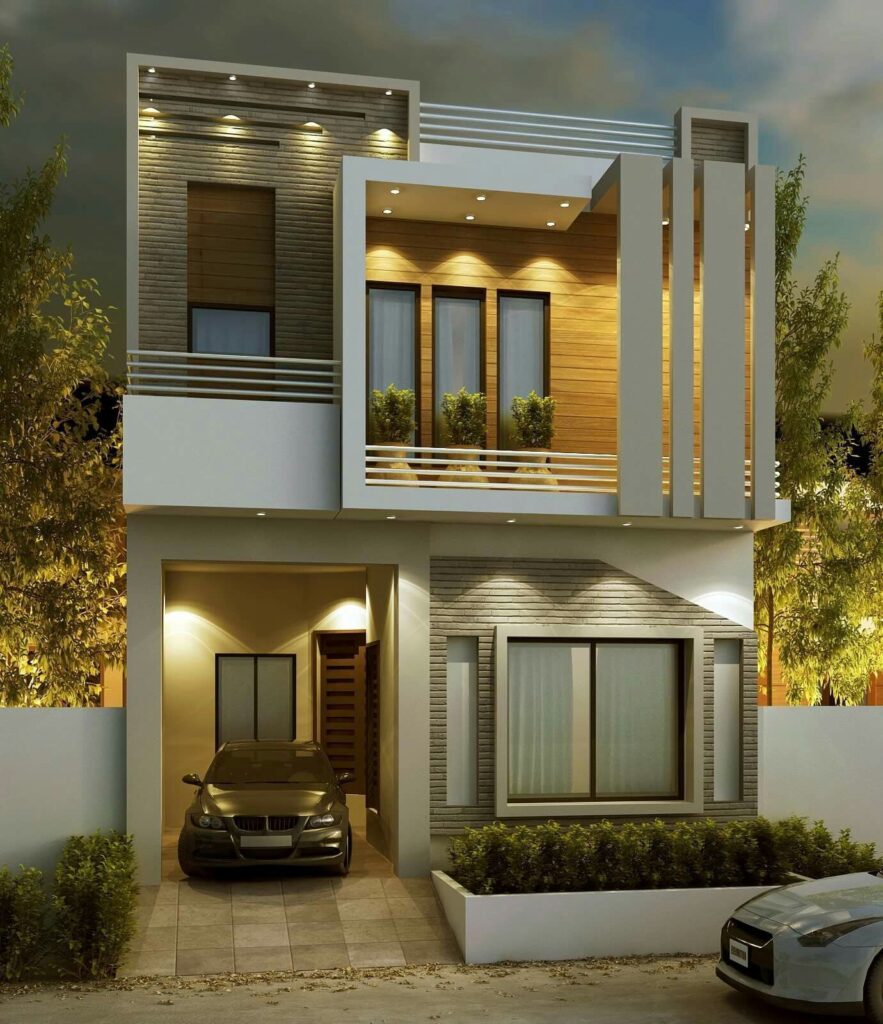
Pakistan’s residential architecture is going through an exciting transformation. As we move through 2026, homeowners across Lahore, Islamabad, Rawalpindi, Karachi, and other major cities are moving away from heavily ornamental facades toward homes that are smarter, greener, and more personal. Whether you’re planning a 5 Marla home or a sprawling 2 Kanal estate, here’s a look at the design trends shaping Pakistan’s housing landscape this year.
1. Minimalist Villas with Clean Lines
Minimalism continues to dominate high-end and mid-range residential design alike. Open floor plans, cubic shapes, and clutter-free facades give homes a timeless, sophisticated look that doesn’t feel tied to a passing trend. Sharp lines, simplified angles, and wide roof overhangs (perfect for shading during Pakistan’s hot summers) define this style, often paired with large framed windows for natural light.
2. Smart Homes Are the New Standard
Technology is no longer a luxury add-on — it’s expected. From voice-controlled lighting and smart gates to automated security and climate control, tech-integrated living is becoming a baseline feature in new builds, especially in gated communities like DHA, Bahria Town, and Lake City.
3. Sustainable & Climate-Responsive Design
With rising electricity costs and increasingly hot summers, sustainability has shifted from a nice-to-have to a necessity. Solar panels, roof insulation, energy-efficient windows, and natural ventilation strategies are now common even in smaller-budget homes, while larger residences increasingly use eco-friendly materials and passive cooling techniques.
4. Fusion of Modern and Classical Styles
Many homeowners want the efficiency of modern architecture without losing a sense of heritage. This has led to a rise in fusion homes — clean, contemporary layouts combined with traditional touches like arches, jali (lattice) work, and courtyards. It’s a popular choice for 8 Marla, 10 Marla, and 1 Kanal houses that want to feel both current and rooted in local culture.
5. Indoor-Outdoor Living
Courtyards, open verandas, and landscaped terraces are being woven back into modern layouts, improving airflow and creating a stronger connection to nature. This approach works especially well in Pakistan’s climate, keeping interiors cooler while adding a resort-like feel to everyday living.
6. Farmhouse & Retreat-Style Homes
On larger plots, there’s a growing appetite for retreat-style farmhouses that combine rustic materials — stone, wood, exposed textures — with modern comforts and smart controls. These homes are designed as a getaway from city stress while still offering the automation and luxury finishes of a contemporary residence.
7. Duplex Apartments with Architectural Drama
In upscale plots and gated communities, duplex layouts featuring floating staircases, mezzanine floors, and double-height spaces are gaining popularity among younger homeowners. Industrial materials like steel, wood, and glass add a bold, contemporary edge.
8. Earthy, Calming Color Palettes
Interior and exterior color choices are shifting toward neutral tones — soft whites, greys, and beiges — paired with accent colors like olive green or royal blue. This creates a calm, grounded feel that complements both modern and traditional architectural elements.
Bringing These Trends to Life
Design trends only translate into a well-built home when they’re paired with sound engineering, quality materials, and skilled execution. This is where working with an experienced construction and architecture partner makes the difference between a home that looks good on paper and one that performs well for decades.
If you’re planning a residential or commercial project in Pakistan, Gemcon Engineering offers end-to-end architectural design, structural engineering, soil testing, and interior finishing services — helping turn these 2026 design trends into a home built to last.
Final Thoughts
2026 is shaping up to be a year where Pakistani homeowners want it all — clean modern aesthetics, smart functionality, sustainability, and a nod to cultural roots. Whichever style resonates with you, the key is partnering with designers and builders who can translate the trend into a structurally sound, climate-appropriate home.