
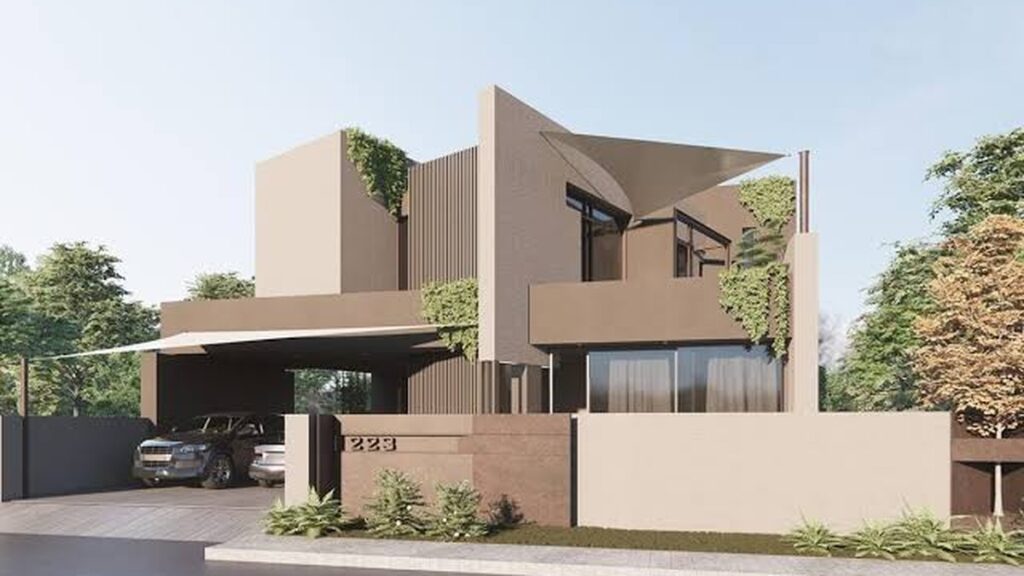
Islamabad is growing fast. New housing societies, commercial plazas, and mixed-use developments are reshaping the capital’s skyline every year. Whether you’re building a private residence in Bahria Town, a commercial plaza on Islamabad Expressway, or an industrial facility on the outskirts of the city, one decision will shape the outcome of your project more than almost any other: choosing the right architectural engineering firm.
This isn’t a decision to rush. A good firm brings your vision to life safely, efficiently, and within budget. A poor choice can mean cost overruns, structural issues, delayed approvals, or a building that simply doesn’t work the way you imagined. Here’s how to make the right call.
1. Understand What an Architectural Engineering Firm Actually Does
Before you start comparing firms, it helps to know what you’re hiring for. Architectural engineering sits at the intersection of design and structural science. These firms don’t just draw pretty facades — they handle structural integrity, MEP (mechanical, electrical, plumbing) systems, load calculations, material selection, and code compliance, all while keeping the architectural vision intact.
If your project involves anything beyond a simple renovation — a multi-story building, a commercial complex, or a structure with unusual design elements — you need a firm that can balance creativity with engineering rigor, not just an architect or just a structural consultant working in isolation.
2. Check Their Local Experience in Islamabad
Islamabad has its own building codes, zoning regulations, and approval processes managed by the Capital Development Authority (CDA), along with specific requirements depending on the sector or housing society you’re building in. A firm with genuine local experience will already understand:
- CDA approval procedures and documentation requirements
- Seismic considerations relevant to the region
- Local soil conditions and their impact on foundation design
- Society-specific building bylaws (Bahria Town, DHA, F-sectors, etc.)
A firm with a strong local track record will save you months of back-and-forth with regulatory bodies. Ask prospective firms directly: how many projects have they completed in Islamabad, and can they show you examples of buildings that have actually been approved and constructed here — not just rendered concepts.
3. Review Their Portfolio Critically
Don’t just glance at glossy renderings. Look for:
- Diversity of project types — residential, commercial, institutional. A firm that has only done small residential work may struggle with a large commercial project, and vice versa.
- Completed, occupied buildings — not just proposals or 3D visualizations. Ask to visit a completed project if possible.
- Design consistency with functionality — does their portfolio show buildings that are not only visually striking but also practical, energy-efficient, and well-ventilated for Islamabad’s climate?
If you can, speak to a past client. A five-minute conversation about how the firm handled delays, budget changes, or unexpected site issues will tell you more than any brochure.
4. Evaluate Technical Capability and In-House Services
Some firms outsource structural analysis or MEP design to third parties, which can create communication gaps and coordination delays. Ideally, look for a firm offering integrated in-house services — architectural design, structural engineering, and project management under one roof. This reduces friction between disciplines and usually results in a smoother, faster project timeline.
A firm like <a href=”https://gemconengineering.com” target=”_blank” rel=”noopener noreferrer”>Gemcon Engineering</a> is a good example of this integrated approach, offering architectural and engineering services together rather than treating them as separate, disconnected phases. When design and engineering teams work side by side from day one, problems get caught on paper — not after the foundation is poured.
5. Ask About Software and Design Tools
Modern architectural engineering relies heavily on Building Information Modeling (BIM), AutoCAD, structural analysis software like ETABS or STAAD Pro, and energy modeling tools. Firms using updated technology can catch design clashes early, produce more accurate cost estimates, and give you a clearer visual sense of the final product before construction even begins.
Ask how they present designs. If a firm can only show you flat 2D drawings for a complex project, that’s a red flag. You should expect at least 3D visualizations, and ideally a walkthrough or BIM model for larger projects.
6. Get Clarity on Cost Structure Early
Architectural and engineering fees in Pakistan are sometimes charged as a percentage of construction cost, sometimes as a fixed fee, and sometimes on a per-square-foot basis. Before signing anything:
- Ask exactly what is included in the fee (design, structural drawings, MEP, site supervision, CDA liaison, etc.)
- Clarify what counts as a “revision” versus an additional billable change
- Get a written timeline with milestones tied to payments
Firms that are vague about pricing structure early on often become difficult to negotiate with once the project is underway.
7. Prioritize Communication and Project Management
A firm can be technically excellent and still fail you if communication is poor. During your initial meetings, notice:
- How quickly they respond to your questions
- Whether they explain technical decisions in plain language
- Whether they assign a dedicated point of contact for your project
Construction projects involve dozens of small decisions along the way. You want a firm that keeps you informed, not one that disappears for weeks and resurfaces with surprises.
8. Confirm Licensing, Registration, and Compliance
Verify that the firm and its lead engineers/architects are registered with relevant bodies such as the Pakistan Engineering Council (PEC) and the Pakistan Council of Architects and Town Planners (PCATP). This isn’t just a formality — it affects whether your building drawings will be accepted for CDA approval, and it protects you legally if disputes arise later.
9. Ask About Post-Construction Support
A responsible firm doesn’t disappear once the building is handed over. Ask whether they offer post-construction support such as defect liability follow-up, maintenance guidance, or as-built documentation. This matters especially for commercial or industrial projects where systems need to be fine-tuned after occupancy.
Final Thoughts
Choosing the right architectural engineering firm in Islamabad comes down to a mix of local expertise, technical capability, transparent pricing, and reliable communication. Take your time during the selection process — visit completed projects, ask hard questions about cost and compliance, and choose a team that treats your project as a genuine partnership rather than just another contract.
Firms such as <a href=”https://gemconengineering.com” target=”_blank” rel=”noopener noreferrer”>Gemcon Engineering</a>, which combine architectural design with structural and engineering expertise under one roof, can offer the kind of integrated approach that reduces delays and keeps your project aligned from concept to completion. Whatever firm you choose, make sure it’s one that understands both the vision you’re building toward and the technical realities of building in Islamabad.