
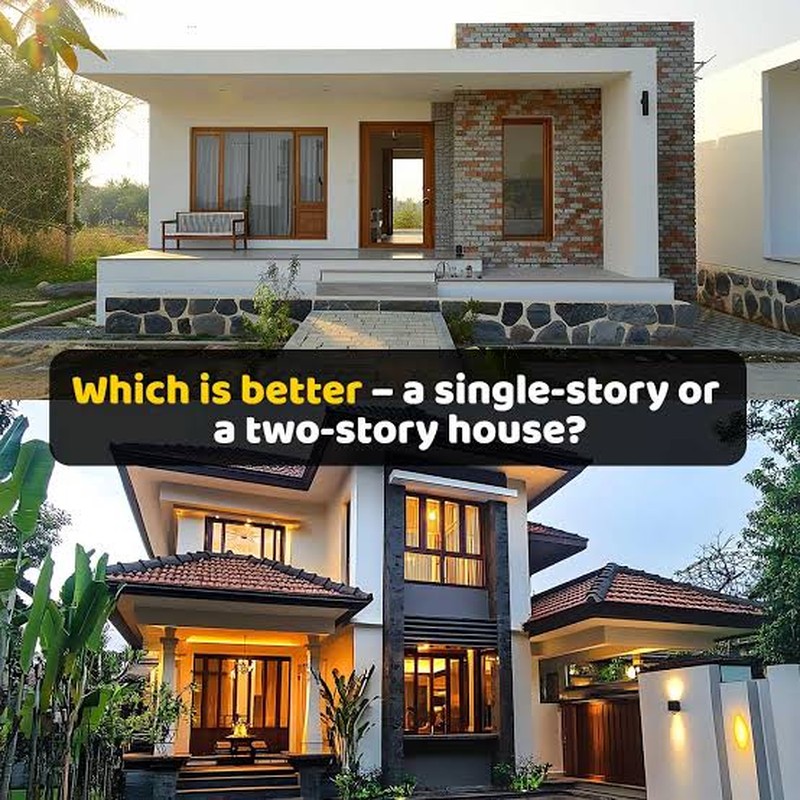
Choosing between a single-story and a double-story home is one of the biggest decisions you’ll make before construction even begins. It’s not just about how much space you want or how the house will look — it’s about what your land can actually support, and what your budget can realistically sustain over the long run. At Gemcon Engineering, we’ve guided countless clients through this exact decision, and the honest answer is: there’s no universal “better” option. The right choice depends on a careful reading of your soil conditions, your financial plan, and your long-term goals for the property.
Why Soil Type Matters More Than You Think
Before you even sketch a floor plan, the ground beneath your feet should be doing most of the talking. Soil bearing capacity — the amount of load your land can safely support — directly determines what kind of structure is feasible without expensive workarounds.
Weak or Soft Soil (Clay, Silt, Loose Fill) If your site has soft clay, loose sandy soil, or reclaimed/filled land, a double-story building puts significantly more pressure on the foundation. This doesn’t mean double-story is impossible — but it usually means investing in deep foundations, pile foundations, or extensive soil stabilization work. These interventions can add a substantial percentage to your overall construction cost. For clients with weak soil and a tighter budget, our engineers at Gemcon often recommend starting with a single-story structure, designed with a foundation strong enough to support a second floor later if needed.
Moderate to Firm Soil Sites with moderately compacted soil or firm clay can usually support a double-story structure with standard foundation designs, though a proper geotechnical investigation is still essential. This is where the decision starts leaning more heavily on budget and lifestyle needs rather than structural limitations.
Rocky or Highly Stable Soil If you’re fortunate enough to be building on rocky or naturally stable ground, both single and double-story options are structurally sound with conventional foundations. Here, the decision becomes almost entirely a matter of budget, future planning, and personal preference.
The key takeaway: never assume your soil can handle a second floor just because your neighbor’s plot does. Soil conditions can vary dramatically even within the same street. A proper soil test isn’t an optional extra — it’s the foundation (literally) of every recommendation Gemcon makes.
Budget: The Other Half of the Equation
Even when soil conditions are favorable for either option, budget often becomes the deciding factor — and it’s more nuanced than simply “double-story costs more.”
Upfront Construction Cost Per square foot, a double-story home is often more cost-efficient than a single-story home of equivalent covered area. This is because you’re spreading the cost of the roof, foundation, and land development over two levels instead of one. If you need more living space and land is expensive or limited, going vertical can actually save money in the long run.
Foundation and Structural Costs On weaker soils, this cost-efficiency can flip. The reinforced foundation, additional steel, and structural columns needed to safely support a second floor can eat into — or even erase — those per-square-foot savings. This is exactly why a soil report should come before a budget breakdown, not after.
Phased Construction For clients who want a double-story home eventually but aren’t ready for the full cost today, Gemcon often designs single-story homes with a “future-ready” foundation. This means the footings, columns, and structural elements are engineered from day one to support an additional floor later, letting you build in phases without redoing structural work or compromising safety.
Long-Term Costs Don’t forget maintenance, utility costs, and taxes. Double-story homes generally mean higher costs for cooling/heating larger volumes, more exterior maintenance (like roofing and painting at height), and sometimes higher property taxes depending on your municipality’s structure.
Other Practical Factors to Weigh
Beyond soil and budget, a few other considerations often tip the scale:
- Plot Size: On a small plot, going vertical maximizes usable space without eating into your yard or setback areas.
- Family Needs: Growing families or multi-generational households often benefit from the separation and privacy a second floor provides.
- Local Building Codes: Height restrictions, floor area ratio (FAR), and zoning laws can limit or mandate certain choices regardless of soil or budget.
- Resale Value: In many markets, double-story homes command a premium resale value due to the extra square footage, but this varies by location and buyer demand.
Gemcon’s Recommendation Process
When clients come to us undecided between single and double-story, we don’t start with opinions — we start with data. Our process typically includes:
- Soil Investigation: A geotechnical study to determine bearing capacity, water table depth, and soil composition.
- Budget Mapping: A transparent cost comparison of single vs. double-story options, including foundation costs specific to your soil type.
- Future-Proofing Discussion: Understanding whether you might want to expand later, so we can design accordingly even if you start small.
- Structural Design: Engineering a foundation and structure that matches both your soil conditions and financial comfort zone — not the other way around.
Final Thoughts
There’s no one-size-fits-all answer to the single-story versus double-story debate. Strong soil and a flexible budget might make double-story the obvious efficient choice. Weak soil and a tighter budget might steer you toward a single-story home with room to grow. The only way to know for certain is through proper soil testing and honest budget planning — guesswork here can be an expensive mistake.
If you’re planning your next home and want a data-backed recommendation tailored to your land and your budget, the team at Gemcon Engineering is ready to help you build the right foundation — literally and financially — for your future.